What to Do When Your AC Stops Working in Colorado Springs
When the temperature outside is pushing 90 degrees and your air conditioner stops running, the instinct is to panic, and that’s absolutely understandable. But most AC failures in Colorado Springs have straightforward causes, and some of them you can check yourself in under five minutes before picking up the phone.
This guide covers what to do first, what the most common failure causes look like, when to call for same-day service, and what to expect when a technician arrives. If your system stopped working today, start here.
Start With the Simple Checks
Before anything else, work through these quickly. A surprising number of service calls turn out to be one of the following:
- Check the Thermostat
Make sure it’s set to cooling mode and that the set temperature is lower than the current room temperature. If the thermostat has batteries, replace them even if you think they’re fine. A thermostat that loses power or glitches is a common reason an otherwise healthy system appears dead.
- Check the Circuit Breaker
Go to your electrical panel and look for the AC breaker. If it’s tripped, it will sit in a middle position rather than clearly on or off. Reset it by switching it fully off, then back on. If it trips again immediately, stop there and call a technician. A breaker that won’t hold is telling you something about the system’s electrical load that needs a professional look.
- Check the Air Filter
A filter that is completely clogged can cause the evaporator coil to freeze over, which shuts the system down. Pull the filter and hold it up to light. If you can’t see light through it, replace it. If the coil is frozen, you’ll see ice on the refrigerant line near the air handler. Turn the system to fan-only for an hour to let it thaw before trying to run it again.
- Check the Outdoor Unit
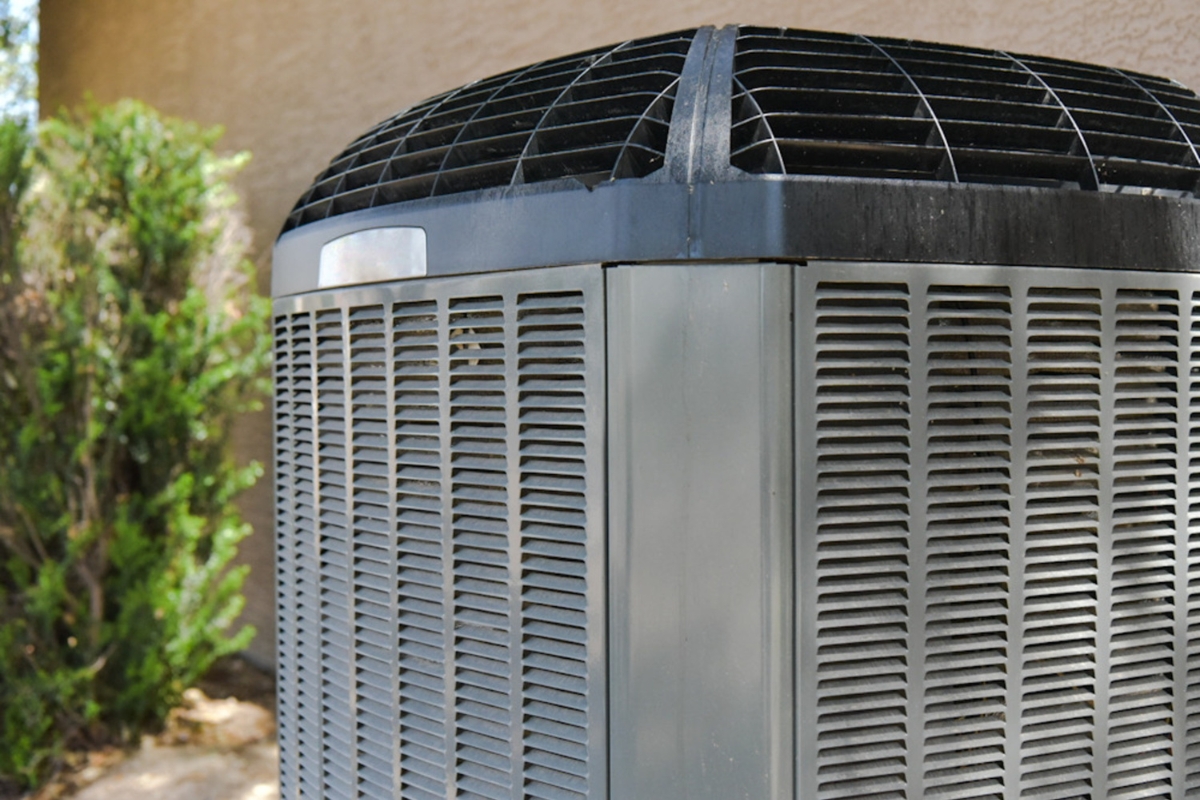
Walk outside and look at the condenser. The fan on top should be spinning when the system is calling for cooling. If the fan is running but you’re not feeling cool air inside, that’s a different problem than if the unit is completely silent. Note which one you’re seeing before you call.
If you’ve worked through all four of those and the system still isn’t running, you’re dealing with something that needs a technician.
How Do You Know If Your AC Problem Needs a Same-Day Call?
Not every AC issue is an emergency, but some are. In Colorado Springs, where July temperatures regularly reach the high 80s and upper floors of a home can climb well above that, a fully failed system on a hot day is a health consideration for elderly family members, young children, and pets, not just a comfort issue.
Call for same-day service if:
- The system is completely off and none of the basic checks above restored it
- The outdoor unit is making a loud grinding, screeching, or clanking noise
- You smell something burning near the air handler or outdoor unit
- The circuit breaker tripped and won’t reset
- The outdoor unit’s refrigerant line has ice on it and the system won’t run after thawing
- Indoor temperatures are climbing into the mid-80s or above with vulnerable household members present
It can likely wait a day or two if:
- The system is running but cooling less effectively than usual (this is a different problem, and usually not an emergency)
- The system cycles on and off more than normal but still produces some cooling
- One room is less comfortable than others while the rest of the house feels fine
If you’re unsure, call. We’d rather talk through it with you than have you wait through a heat wave on a problem that could have been resolved quickly.
The Most Common Reasons AC Units Stop Working in Colorado Summers
Understanding what likely happened helps set expectations for the repair conversation.
Capacitor failure. This is the single most common cause of sudden AC shutdowns in summer. The capacitor is a component in the outdoor unit that helps start the compressor and the condenser fan motor. Capacitors wear out over time and are particularly vulnerable to heat, which makes July their peak failure month. A failed capacitor is a straightforward repair. The technician replaces the component, and the system is back online in most cases within the hour.
Contactor failure. The contactor is an electrical switch that controls power to the compressor and condenser fan. It takes a voltage signal from the thermostat and closes the circuit to start the outdoor unit. Contactors wear out after years of cycling, and in hot weather they fail more often. Like capacitors, this is a common and typically quick repair.
Refrigerant leak. If the system ran for a while and then gradually lost its ability to cool before stopping, low refrigerant from a slow leak is a possibility. You can’t see a refrigerant leak without equipment, but the pattern of the problem is telling: the system runs but cooling gradually worsens over days or weeks before it stops keeping up entirely. Refrigerant repairs involve finding and fixing the leak, not just adding refrigerant, which is what a thorough technician will do rather than topping off the charge without addressing the source.
Compressor failure. The compressor is the heart of the system, and a failed compressor is a significant repair. It’s also less common than capacitor or contactor failure, but it does happen, particularly on older systems. If the compressor has failed on a unit that is 12 to 15 years old, the repair-versus-replacement conversation becomes worth having.
Frozen evaporator coil. Mentioned above in the filter check. A frozen coil shuts the system down and can be caused by low airflow (dirty filter, blocked vents) or low refrigerant. After thawing, if the system freezes again, there’s an underlying issue to address.
Electrical or wiring issues. Wiring connections that have loosened over years of vibration, rodent damage to low-voltage thermostat wiring, or failed contactors can all cause the system to lose power in ways that aren’t obvious without a meter. This is why a thorough inspection matters even when the visible components look fine.
What to Expect When You Call Reliable
When you call us for a same-day AC repair in Colorado Springs, here is how it goes.
You’ll speak with someone who can talk through what you’re seeing and give you an honest read on urgency. We’ll schedule a technician and give you a window.
The technician arrives, introduces themselves, and starts with a system diagnosis. They’re not looking to find as many things as possible to repair. Our technicians are on hourly pay, not commission, which means the only recommendation you’re going to hear is the one that reflects what the system needs. If it’s a capacitor, we’ll tell you it’s a capacitor. If the system has three things wrong and only one of them matters for getting it running today, we’ll tell you that too.
Most common repairs, including capacitor and contactor replacements, are completed during the same visit. We carry the most frequently needed components. For less common parts, we’ll let you know the timeline.
We’ve been doing this in Colorado Springs since 2012, and our technicians go through approximately 100 hours of training per year. When they give you a diagnosis, it’s based on actual measurement and inspection, not guesswork.
If Your System Can’t Be Repaired the Same Day
Occasionally a repair requires a part that isn’t stocked on the truck. In those cases, we’ll tell you what we found, what part is needed, what it costs, and what the timeline looks like. We won’t leave you guessing.
If the repair conversation leads to a discussion about replacement, that conversation will be direct. We’ll tell you what the repair costs, what the system’s realistic remaining life is given its age and condition, and what a new system would run. There’s no pressure either direction. Some systems are worth repairing and running for several more years. Others are at a point where the math on continued repair doesn’t work in your favor. We’ll tell you which one we’re looking at.
Frequently Asked Questions
If your AC stopped working today, call Reliable Heating & Cooling at (719) 377-7303. We’ve been keeping Colorado Springs homes cool since 2012, and our non-commissioned technicians will give you a straight answer on what it needs and what it costs.
You can also visit our AC repair page for more on what our repair service covers, or request a quote online.